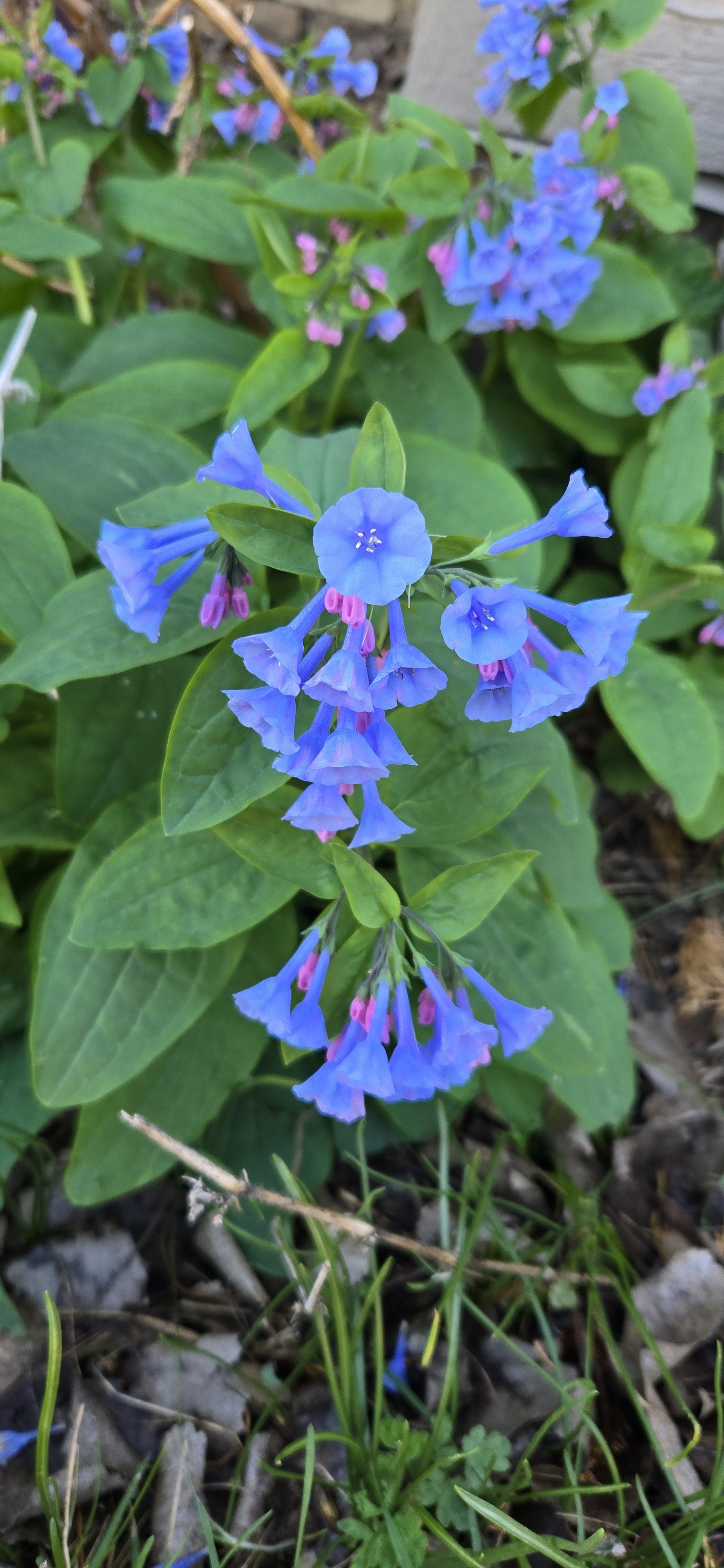
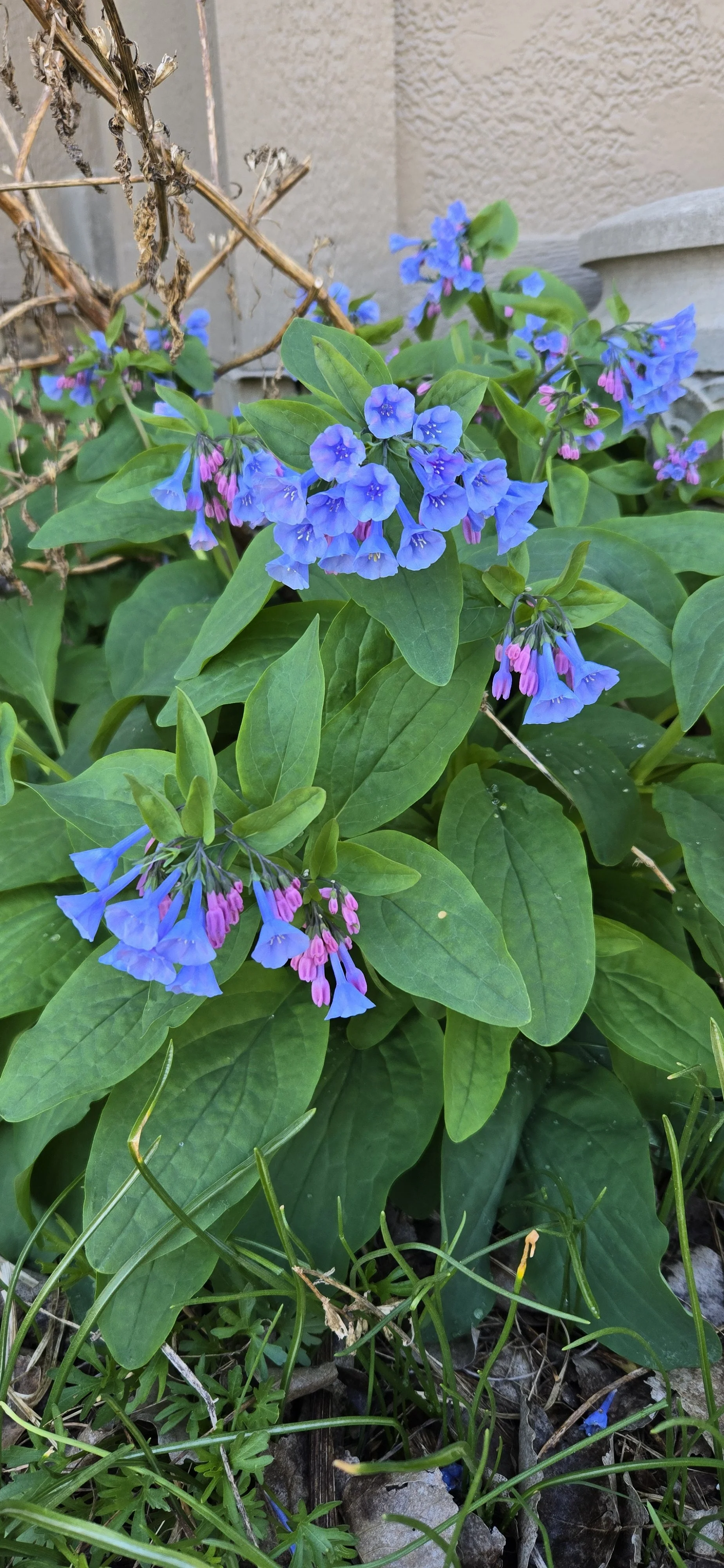
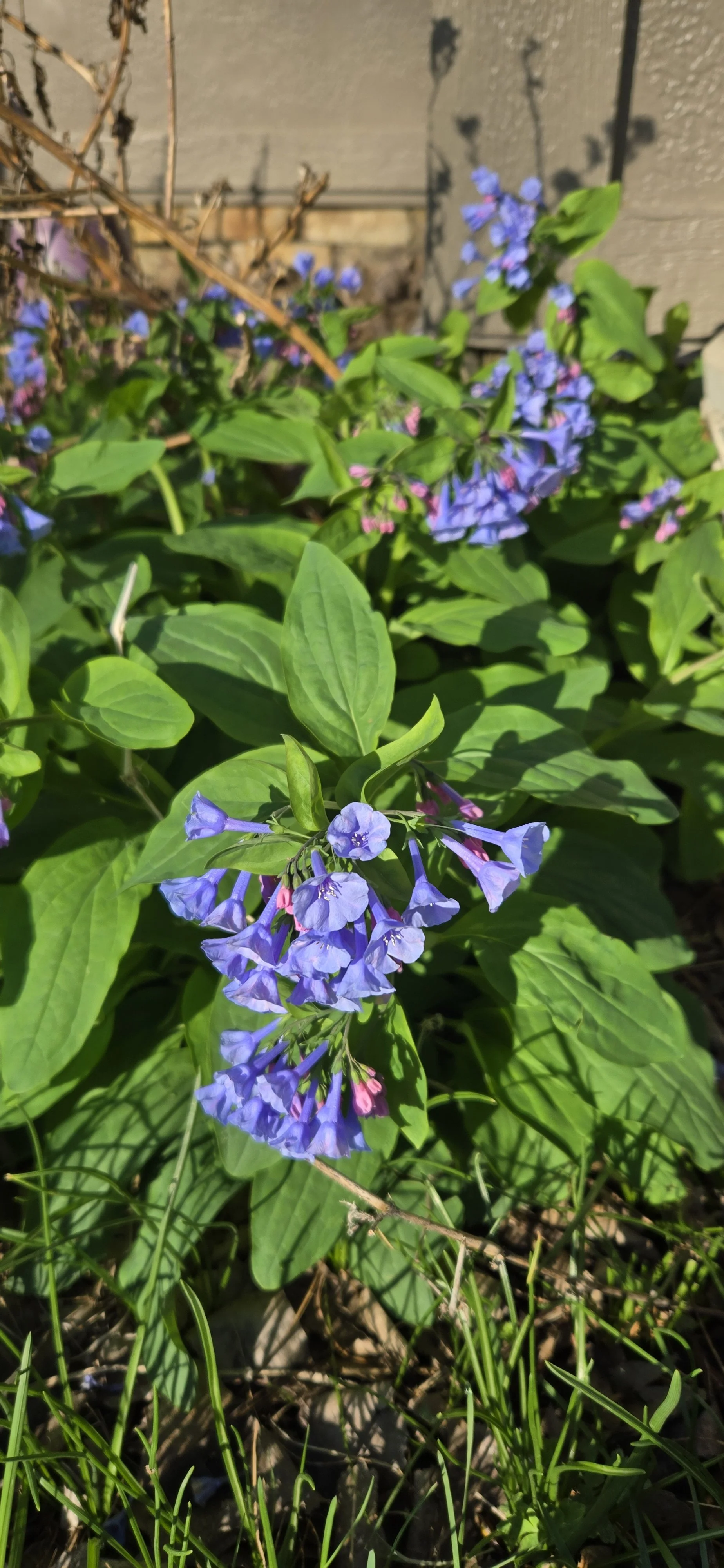
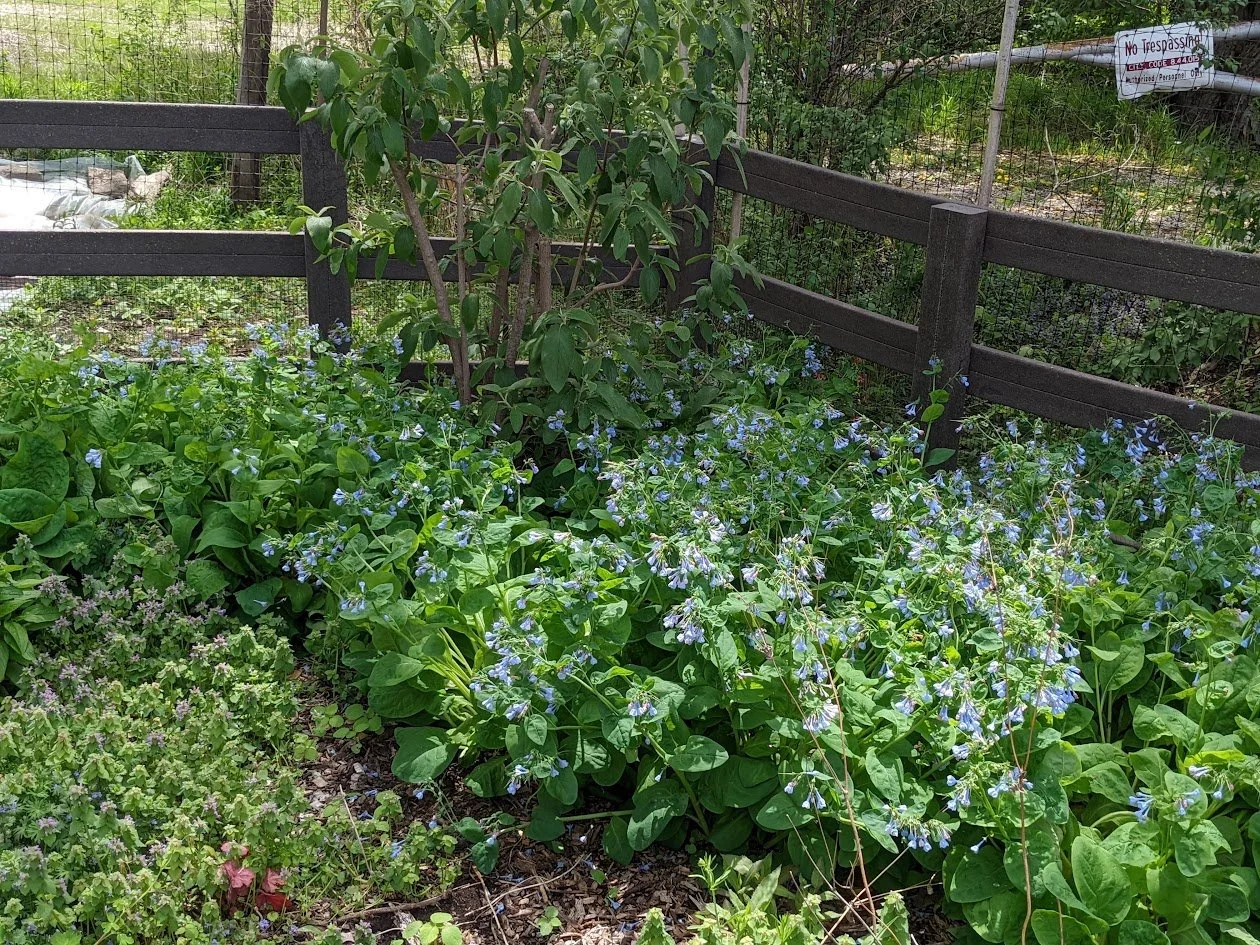
Common Name: Virginia Bluebells
Latin Name: Mertensia virginica
Height: 2 feet tall
Duration: Perennial, Ephemeral
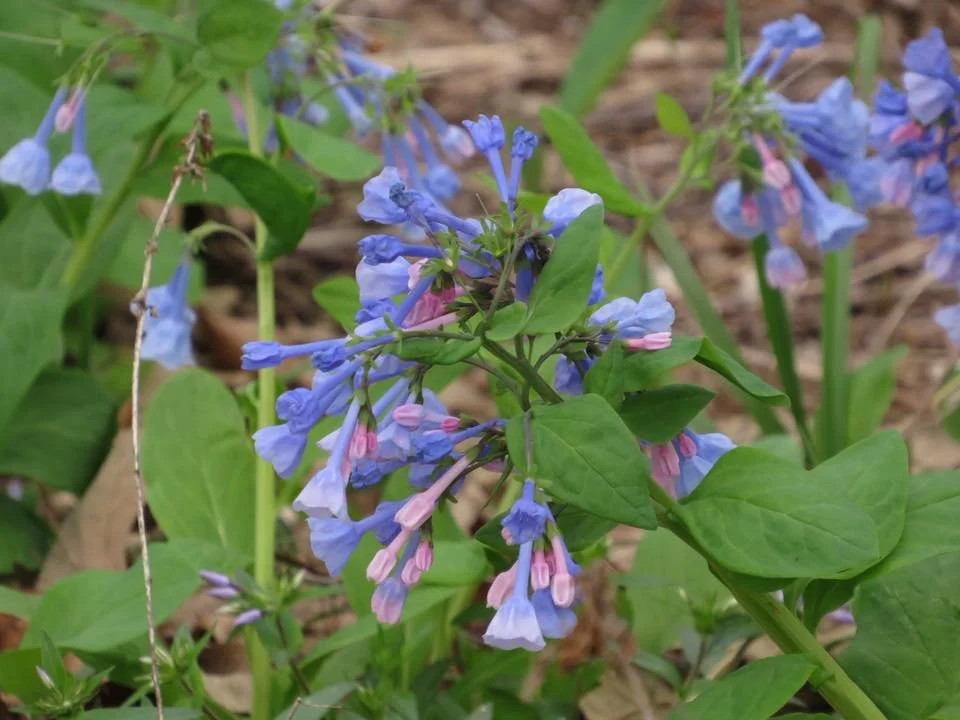
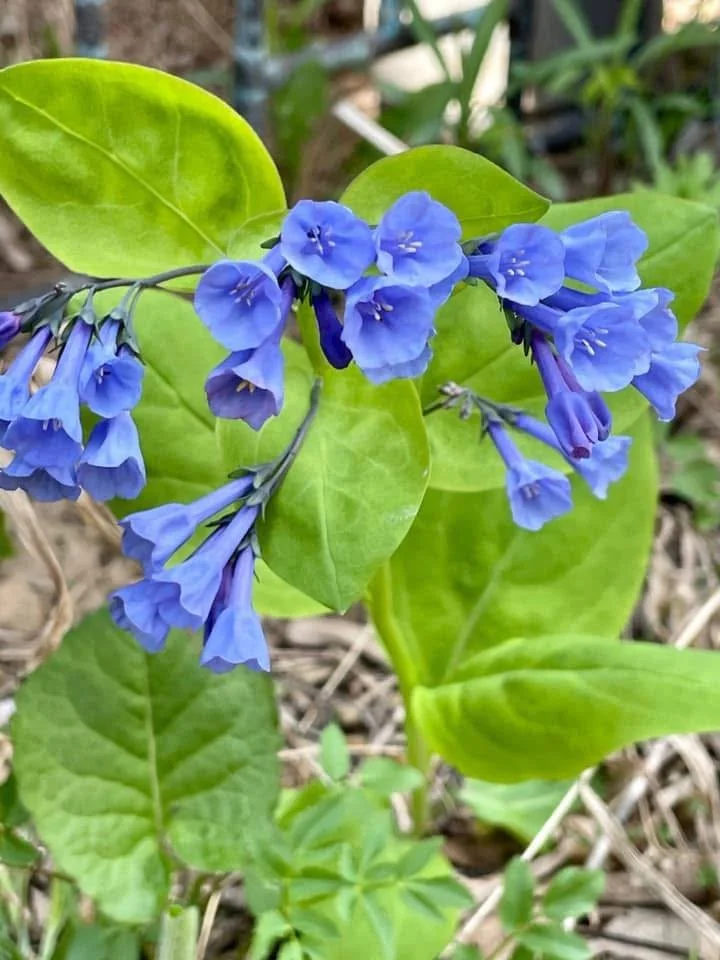
Bloom Color: Pink to purple buds, Blue flower
Bloom Time: April - May
Water Use: Medium-Wet, Medium
Soil: Rich, moist, well-drained, and sometimes rocky soils
Light Requirement: Partial Shade, Shade
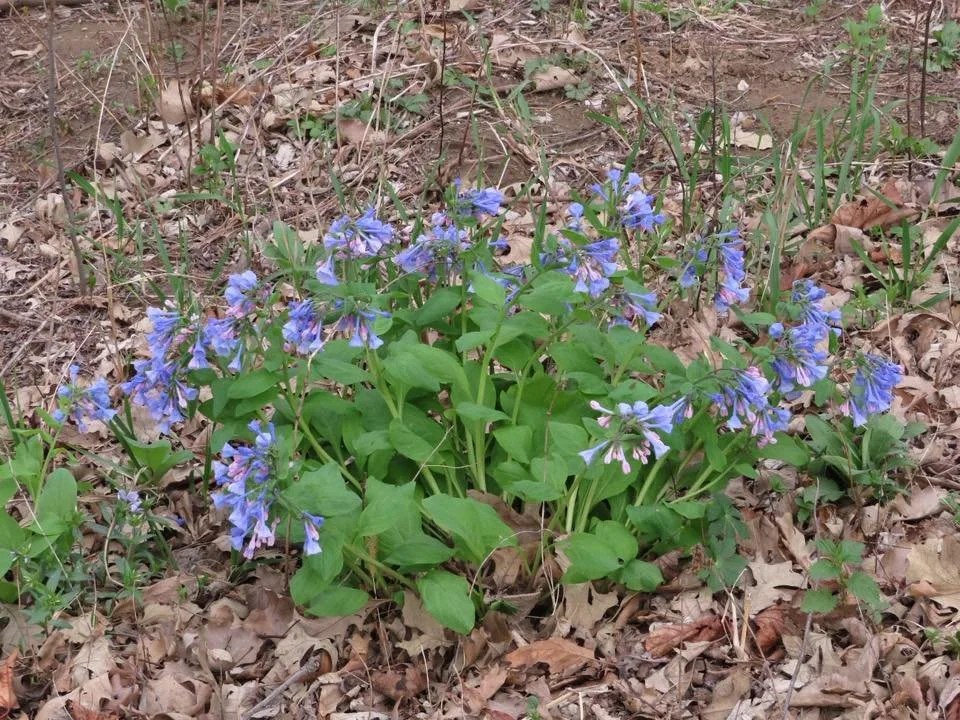
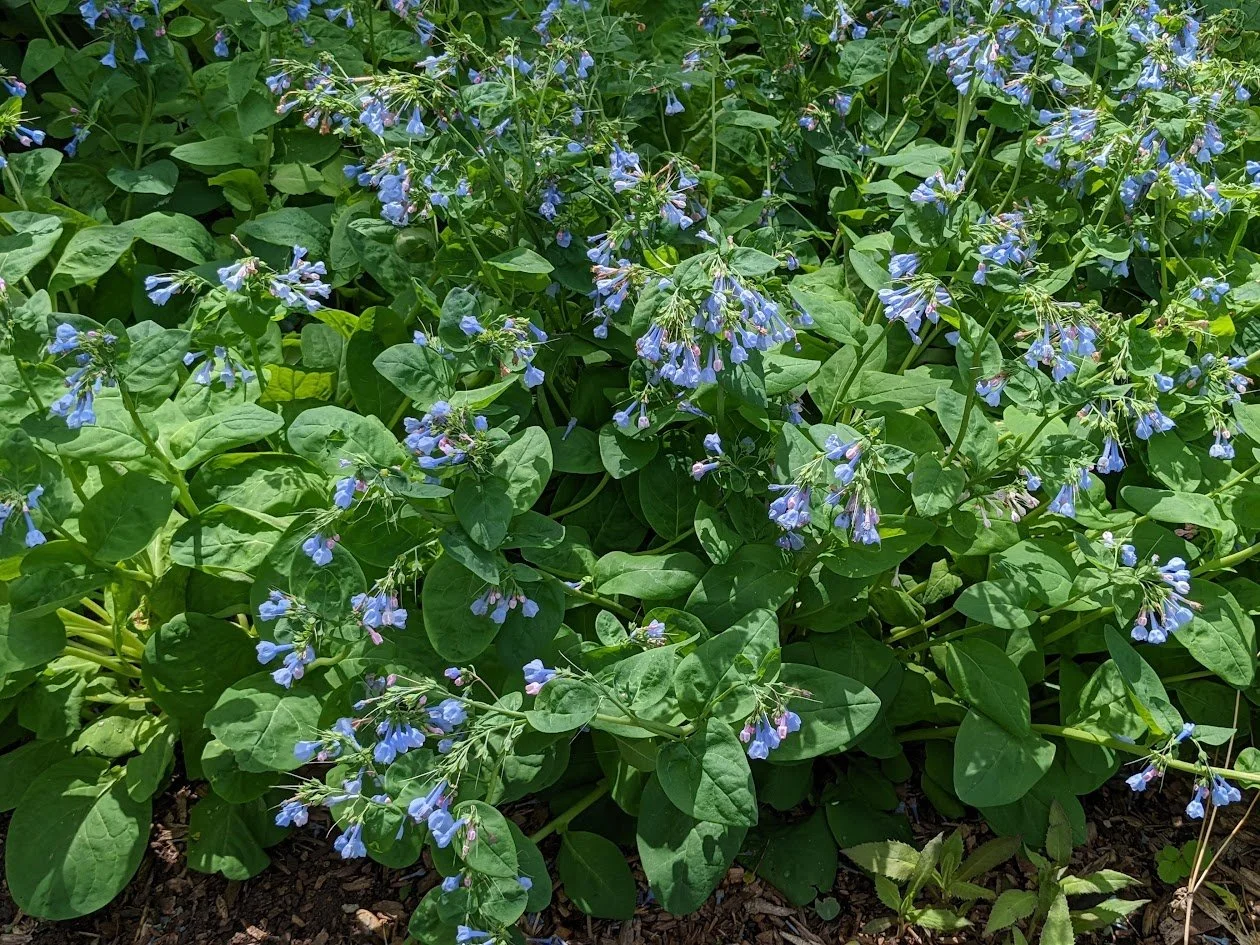
Spreads via underground rhizomes to create colonies, also by seed
Host to caterpillars of the Nessus Sphinx moth
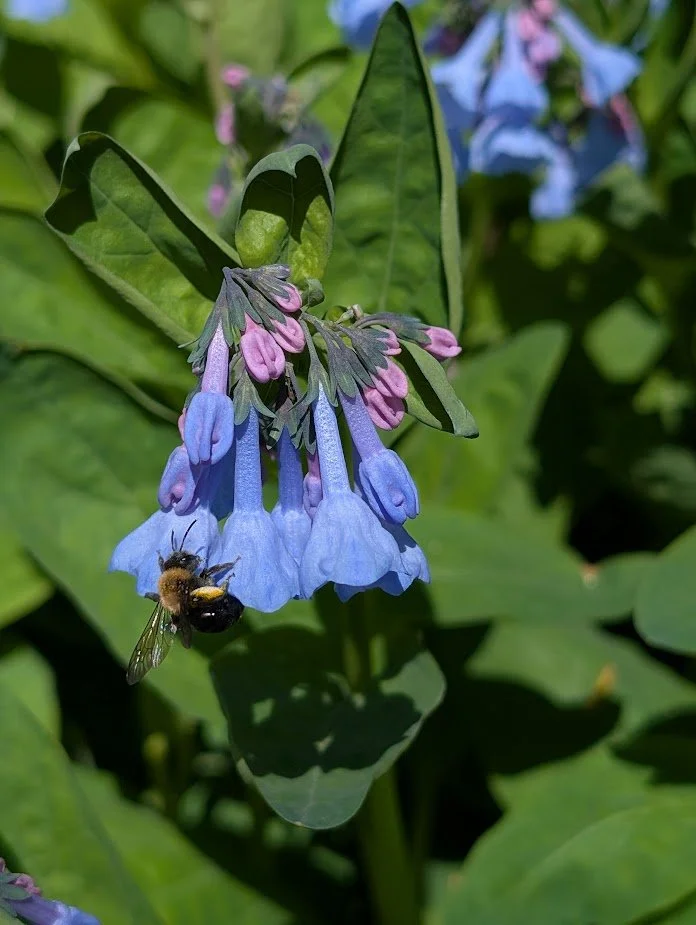
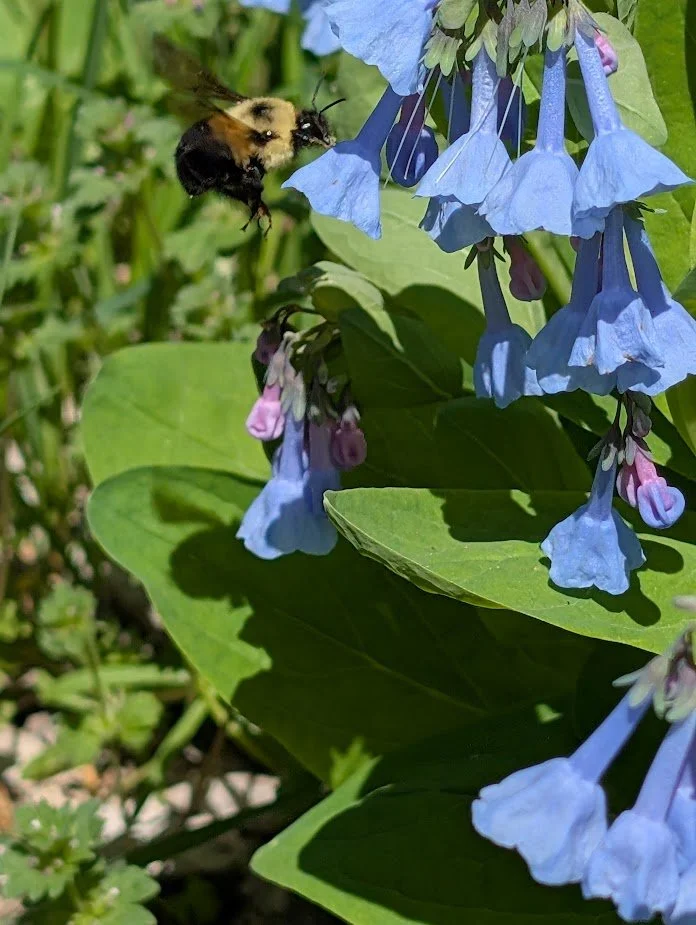
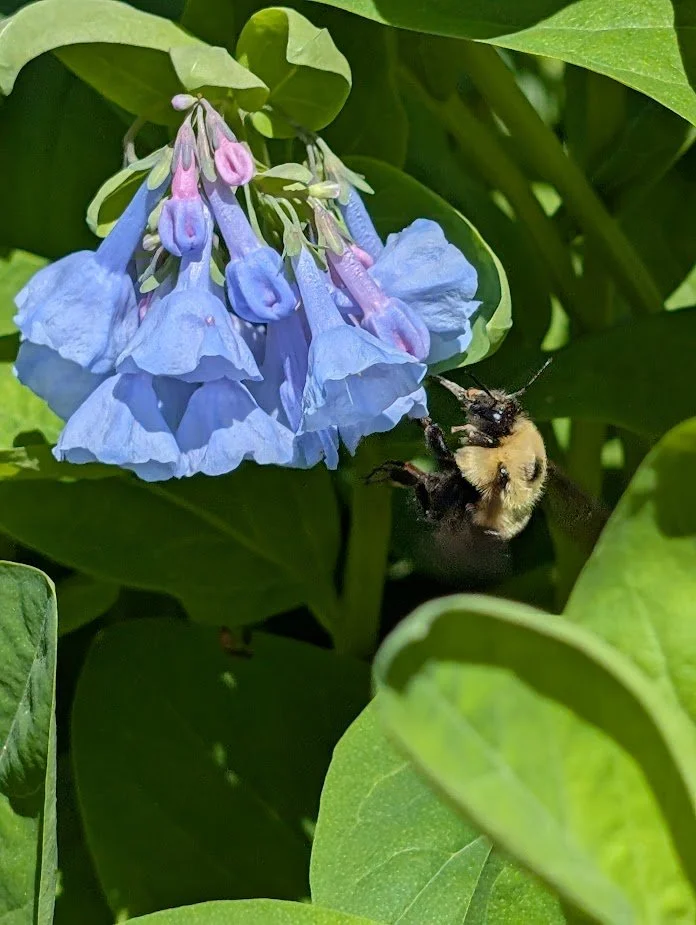
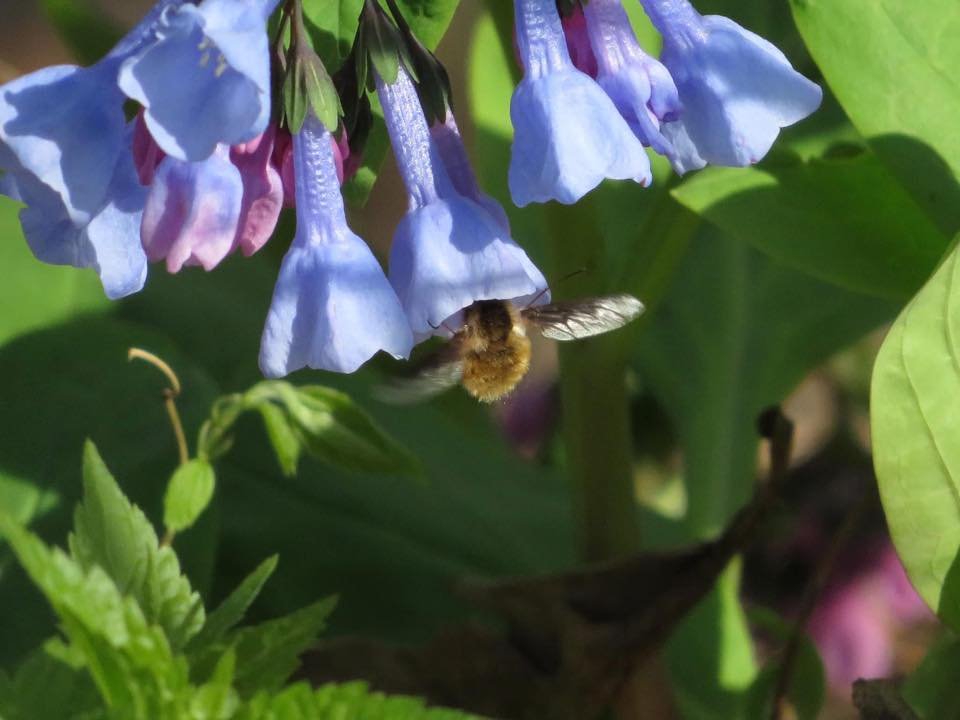
Pollinators: Bees, especially female Bumblebees that fly in early spring, will often be seen visiting the flowers. Only the largest bees have the ability to push their way up the tube. The flowers are cross-pollinated by long-tongued bees primarily, including honeybees, bumblebees, Anthophorid bees (Anthophora spp., Synhalonia spp.), and mason bees (Osmia spp.); these insects obtain nectar and/or collect pollen. Other visitors of the flowers include the Giant Bee Fly (Bombylius major), butterflies, skippers, and Sphinx moths, including a hummingbird moth (Hemaris thysbe). In some areas, the Ruby-Throated Hummingbird has been observed to visit the flowers
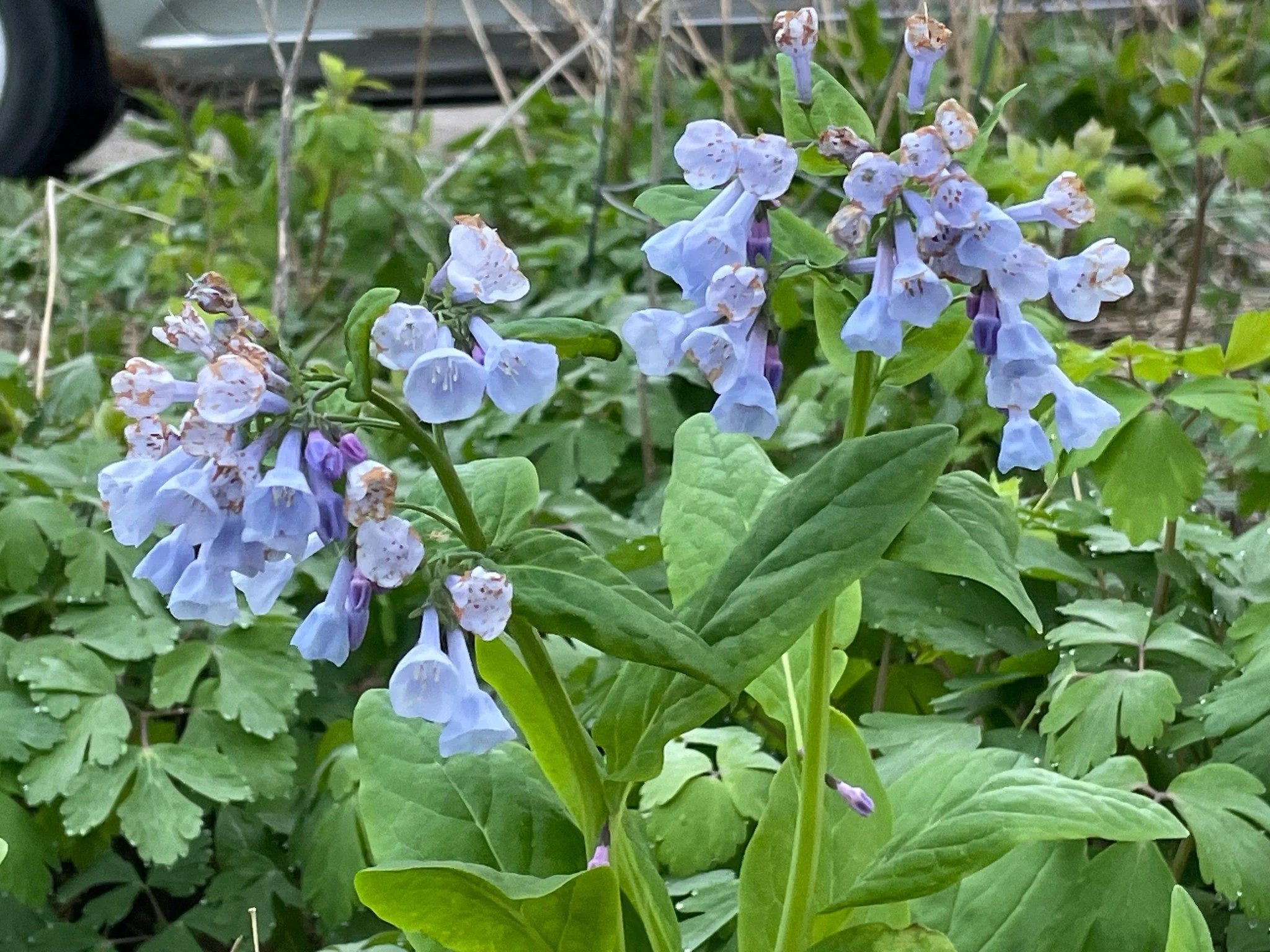
Other Information: Deer resistant. Foliage dies back by mid-summer (ephemeral).