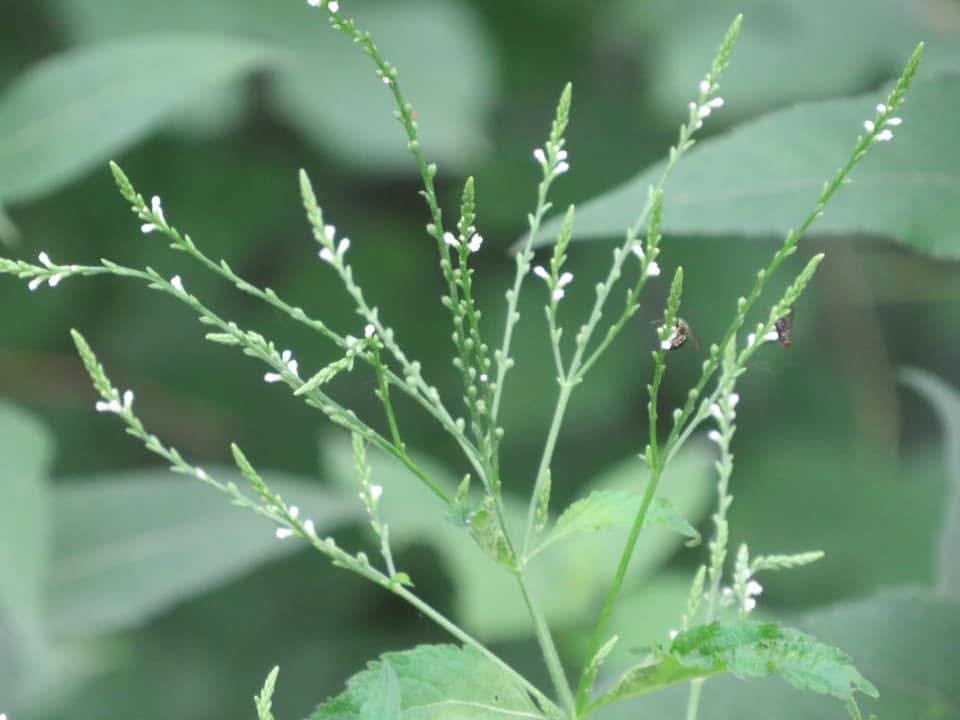
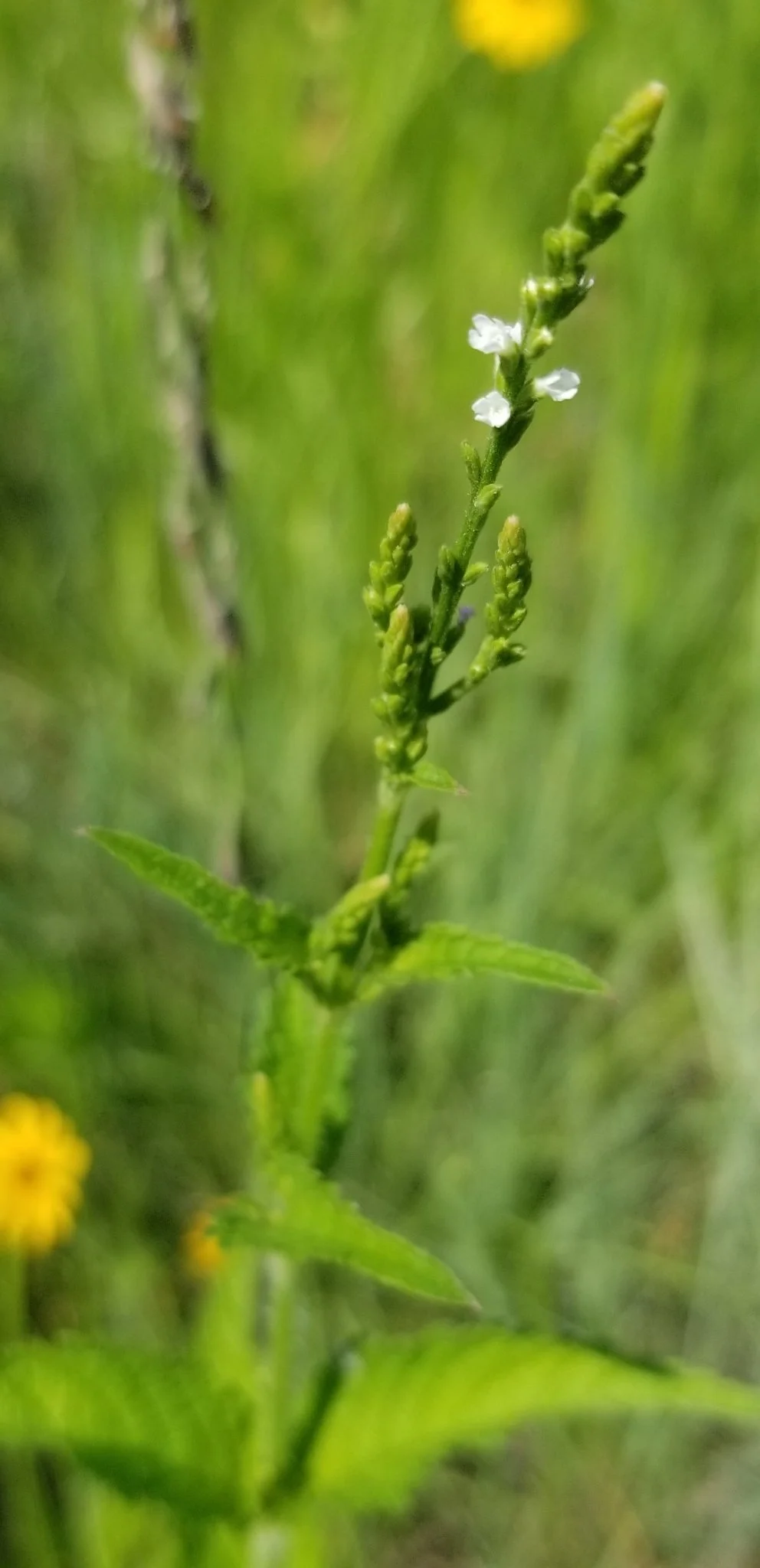
Common Name: White Vervain
Latin Name: Verbena urticifolia
Height: 5 feet
Duration: Perennial, short-lived
Bloom Color: White
Bloom Time: June - September
Water Use: Medium-wet to Medium
Soil: Fertile loam, clay-loam, or silt-loam
Light Requirement: Full, Partial, Shade
Spreads via seeds, some rhizome shoots
Host Plant: Larvae of Verbena Moth, Flea Beetle, larvae of Vervain Leaf Midge, Verbena Aphid and Two-striped Grasshopper.
Pollinators: Long-tongued bees (bumblebees, Little Carpenter bees, Cuckoo bees, Digger bees, & Large Leaf-Cutting bees), Long-tongue bee(Halictid bees, & Dagger bees, including Calliopsis verbenae), wasps, small butterflies, and flies (Syrphid flies, Bee flies, Thick-Headed flies, & Tachinid flies)
Other Information: Although sometimes considered a “weed,” this native plant has high ecological value for wildlife.. Insects aren’t the only ones feasting on this plant – the seeds are also consumed by songbirds. While flowers are not very showy, it can to add a fine-textured airiness to the landscape. Best used for back of larger gardens to the landscape or naturalized areas.